
The Rule of Thumb
If the noise repeats every single time the door moves — a steady squeak or grind, roughly once per second as the door travels — it's almost always a roller. If the sound is a one-time pop, snap, or scrape, and the door starts hanging crooked, it's a cable. That's the quick way to settle the kitchen-table argument.
The exceptions matter, though. A bent track can mimic a bad roller, chirping at the same spots every time. A spring that's losing tension can make a door jerk and groan in a way that sounds cable-related but isn't. And in a lot of older garages around Eaton Park, rollers and cables wear out close together because they're carrying the same load and sitting in the same humid air — so don't be surprised if the fix ends up being both.
What Worn Rollers Actually Sound and Look Like
Rollers are the small wheels riding inside your tracks — usually nylon with sealed bearings, or older steel ones. Worn rollers produce a rhythmic squeak or grinding noise that happens with every rotation, so it matches the door's speed. You might also feel the door shudder slightly as it travels, especially right where a flat spot has formed on the roller.
- Visual signs: cracked or chipped nylon, flat sections instead of a round wheel, rust streaks on steel rollers or their stems
- Where it's worse: near the bottom of the track, where moisture pools after rain and sits against the metal
- Florida factor: afternoon downpours followed by heavy humidity mean condensation gets into roller bearings even when it isn't raining directly on the garage. That moisture cycle rusts steel rollers and dries out nylon ones faster than you'd see in a drier climate.
What a Frayed Cable Actually Sounds and Looks Like
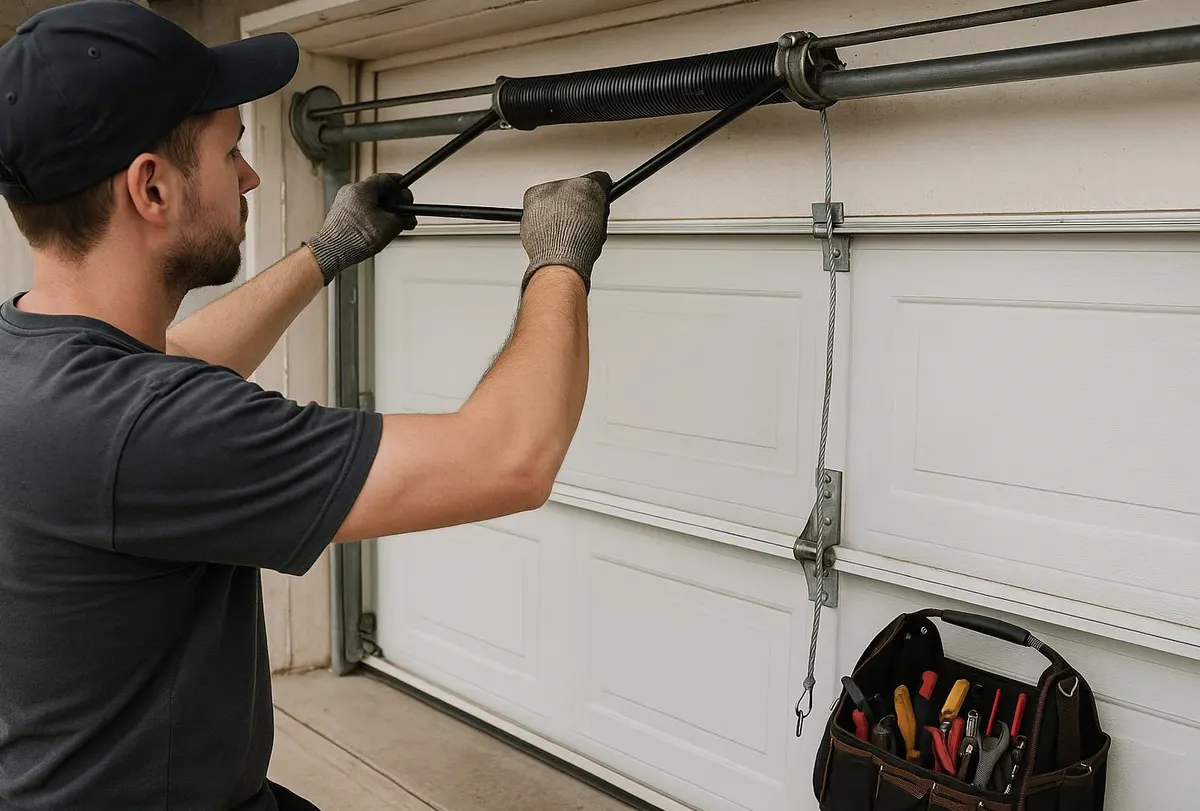
Cables run from the bottom corners of the door up to the drums near the spring system, and they're under real tension whenever the door is closed. A frayed cable usually announces itself with a sharp pop, snap, or scraping sound — not a steady rhythm — and often the door will start to hang unevenly, with one side lower than the other or the door binding as it moves.
- Visual signs: individual strands sticking out like a broken guitar string, rust discoloration on the cable near the bottom bracket, a cable that looks loose or slack on one side compared to the other
- Why it's dangerous: a cable under tension that snaps can whip or let the door drop suddenly. This is not a part to inspect by hand while the door is up or the springs are loaded.
- Florida factor: homes closer to the coast see salt-laden air that corrodes steel cable strands from the inside out, so a cable can look mostly fine on the surface while already losing strength underneath.
Why This Argument Is Worth Having
It's not just about noise — it's about what each repair costs and how risky it is to ignore. A worn roller is a maintenance item; it degrades the ride but rarely causes sudden failure. A frayed cable is a safety item. If it lets go while the door is in motion, you can end up with a door that drops hard, jumps the track, or damages the opener trying to compensate. National ballpark repair costs for roller sets run lower than cable and drum work, partly because cable jobs usually involve releasing spring tension safely, which isn't a simple swap.
A Safe Way to Check Without Guessing
With the door closed and the opener unplugged, look — don't touch — at the cables near the bottom brackets and at the drums up top. Broken strands or visible rust pitting mean it's time for replacement, not a wait-and-see. For rollers, grab the door by hand (door closed, power off) and gently wiggle a roller in its track; noticeable play or a roller that doesn't spin freely is a sign it's near the end of its life. Never try to turn, pry, or loosen anything near a cable or spring while the door is open or under tension.
What Hurricane Season Adds to the Equation
Wind-load rated doors are built to resist pressure during storms, but that rating depends on every component — including rollers and cables — doing its job. Repeated wind gusts flex the door and put extra cyclical stress on rollers and track hardware, while the spring-and-cable system absorbs the load each time the door is tested by pressure changes. After any serious storm, it's worth a quick listen and look: new rubbing sounds, a door that suddenly sits unevenly, or rollers that feel looser than before are all signs the storm accelerated wear that was probably already underway from the daily humidity swings.
When to Call Eaton Park Garage Door Pro
If you've spotted frayed strands, rust pitting, a door hanging crooked, or rollers that wobble and grind, it's time to get it looked at rather than keep adjusting around the noise. Our Cable & Roller Replacement service covers a full inspection of the cables, drums, and roller set, replacing worn parts in matched pairs so the door runs balanced on both sides instead of favoring one track. If the door has already jumped its track or binds when it moves, our Off Track Door Repair team can get it back in alignment and check whether the rollers or cables caused the derailment in the first place.
If your garage door in Eaton Park, FL is squeaking, popping, or hanging unevenly, call Eaton Park Garage Door Pro today and we'll get it diagnosed and fixed before a small noise becomes a bigger problem.