
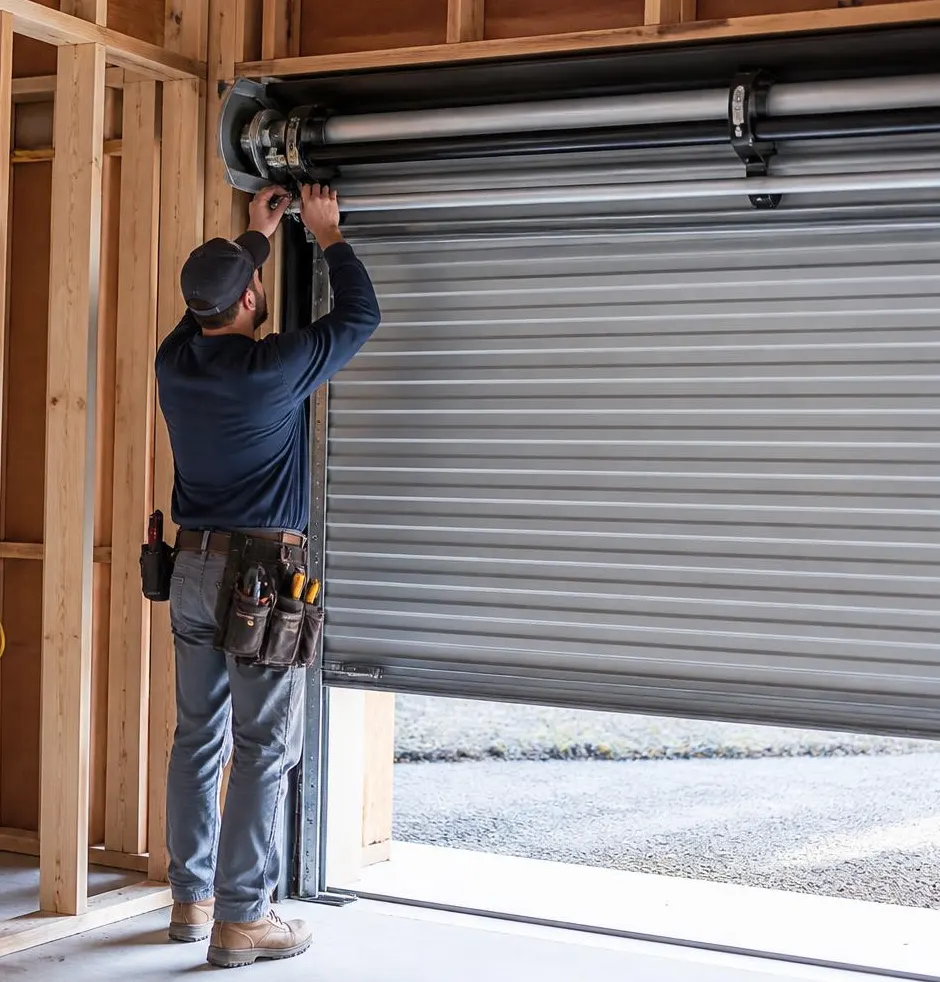
The Moment You Notice Something's Wrong
You hit the button on your way out, watch the door roll down, and then—it stops. Maybe it jerks back up on its own before it even touches the ground. Maybe it won't budge past the halfway mark no matter how many times you press the remote. Or maybe it just sits there, humming, refusing to close at all while the opener light blinks at you like it's trying to tell you something.
In a lot of Eaton Park garages, this starts showing up right after a heavy rain or a stretch of muggy days, which is a clue in itself. Humidity, afternoon downpours, and the general wear that comes with Central Florida weather all play a role in why garage doors start acting up this way. Here's the order a technician actually works through to find the cause.
First Check: The Safety Sensors
Every garage door opener built in the last few decades has two small sensors mounted a few inches off the ground on either side of the track, facing each other. If that invisible beam is broken, blocked, or even just misaligned by a fraction of an inch, the door will reverse before closing or refuse to close at all. This is the single most common reason for this exact symptom, so it's always checked first.
- Dirty or fogged lenses: Humidity and dust film can coat the sensor eyes enough to weaken the signal. A wipe with a soft cloth often fixes it instantly.
- Knocked-out alignment: A bump from a bike, a lawn tool, or even a stray soccer ball can nudge a sensor just enough to break the connection. The lights on each sensor should glow solid, not flicker.
- Sun glare: Low afternoon sun angling into the garage can interfere with the sensor beam during certain months. Shading the sensor or adjusting its angle slightly usually resolves this.
Second Check: Something in the Path
Before assuming it's mechanical, a technician looks for anything breaking the sensor beam or physically blocking the door: a rake leaning in the wrong spot, a bag of mulch, even a cobweb stretched across the sensor eye. It sounds too simple, but it's a frequent fix.
Third Check: Limit Settings and Force Adjustment
Openers have a setting that tells the door how far to travel and how much resistance to push through before reversing. If this is set too sensitively, the door will interpret normal friction as an obstruction and reverse. This setting can drift over time, especially in garages where humidity causes a wood or wood-composite door to swell slightly, changing how much resistance the opener feels as the door nears the floor.
Fourth Check: Track Alignment
Wind-driven rain and the general stress of storm season can rattle doors on their tracks over time, even without a direct impact. A track that's bent, pulled away from the wall, or slightly out of parallel will cause the door to bind or stick at a specific point—often the same spot every time. This shows up as a door that hesitates, reverses, or stalls partway down rather than failing to close completely.
Fifth Check: Springs Under Strain
If the door makes it look like it's straining—moving slower than normal, closing unevenly, or requiring the opener to work harder than it should—worn or broken springs are often the real issue. The opener isn't designed to lift the full weight of the door on its own; when the springs can't carry their share, the opener senses excess resistance and reverses to protect itself and the motor.
Sixth Check: Rollers and Cables
Salt-tinged air and routine humidity take a toll on metal hardware here, and rusted or worn rollers can cause the door to drag or hitch as it travels. A fraying cable can do something similar, plus it's a safety hazard that needs attention before it fails completely.
When to Call Eaton Park Garage Door Pro
If you've wiped the sensors, cleared the path, and the door still won't close cleanly, it's time to bring in a technician rather than keep adjusting settings by trial and error. We handle Off Track Door Repair for doors that have drifted out of alignment from storm stress or age, and Garage Door Spring Repair when worn springs are putting extra strain on the opener. We'll also check the whole system during a Garage Door Maintenance & Tune-Up so small issues don't turn into a door that won't close at all.
If your garage door in Eaton Park, FL is reversing, hesitating, or refusing to close, call Eaton Park Garage Door Pro today and we'll get it working right again.